Skin Tag ICD-10 Code: L91.8 Billing Guide
Coding skin tags (acrochordons) with L91.8: when removal is covered, medical necessity documentation, related CPT codes and cosmetic-versus-medical rules.
- Published by
- MedBiller Texas
- Published
- Updated
- Reading time
- 3 min
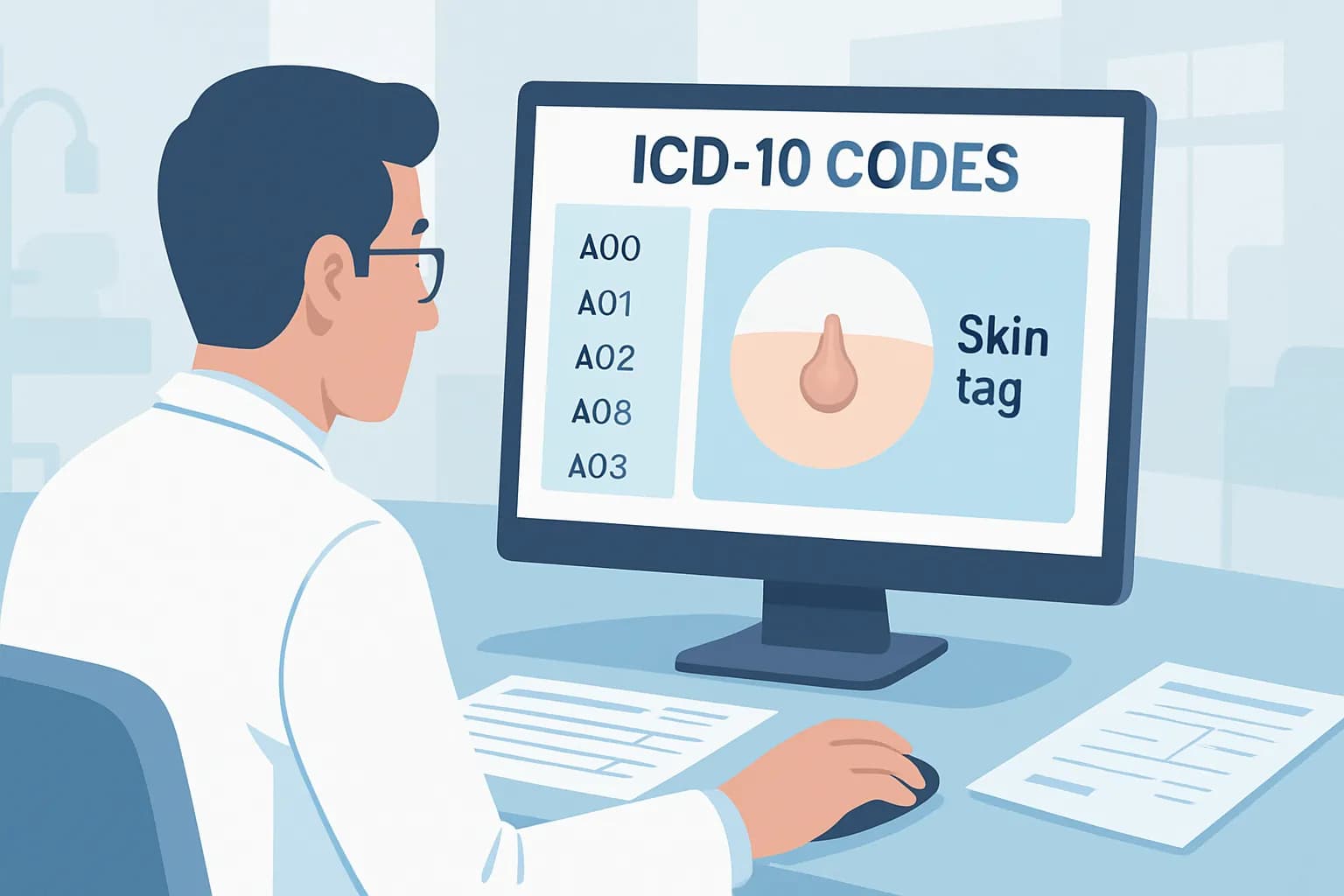
Skin tags, medically called acrochordons, are small, soft growths that are usually harmless. Billing for their removal is a classic area of confusion because many payers treat removal as cosmetic unless there is a documented medical reason. This guide covers the diagnosis code, the procedure codes and the documentation that supports payment.
The diagnosis code
Skin tags are indexed to L91.8, other hypertrophic disorders of the skin.
If the provider documents a symptom caused by the tag, such as irritation, bleeding, pain, or infection, additional codes for that condition may support medical necessity.
The procedure codes
Skin tag removal is reported with CPT:
| Code | Description |
|---|---|
| 11200 | Removal of skin tags, multiple fibrocutaneous tags, any area; up to and including 15 lesions |
| 11201 | Each additional 10 lesions, or part thereof (add-on, reported with 11200) |
Other methods and lesion types use other codes, so make sure the documented lesion is a skin tag.
Cosmetic or medically necessary?
Most payers, including Medicare, do not cover removal for appearance alone. Removal is more likely to be covered when the record shows the tags:
Are irritated, inflamed or bleeding
Catch on clothing, jewelry or skin folds and cause pain
Have become infected
Interfere with a normal function
Are changing in a way that raises concern about another diagnosis
A tag removed only because the patient dislikes it is a cosmetic service. Billing it to insurance as medically necessary is a compliance risk. Many practices have patients sign a cosmetic waiver or self-pay agreement in advance.
Documentation that supports the claim
The location and number of lesions removed
The symptoms, with dates and how they affect the patient
Exam findings, including signs of irritation or inflammation
The removal method (for example cryotherapy, snip excision or cautery)
Any pathology if a lesion was sent to the lab, and the reason it was sent
Photographs are often requested by payers for medical necessity review.
Common mistakes
Billing 11200 without documented symptoms for a payer that treats removal as cosmetic
Reporting the wrong number of lesions, or using 11201 alone
Choosing a diagnosis code that does not describe the reason for removal
Billing a different, higher-paying lesion removal code for a simple skin tag
No cosmetic agreement when the service is not covered
Quick reference
| Item | Detail |
|---|---|
| Diagnosis | L91.8 (plus codes for any documented symptom) |
| Procedure | 11200, with 11201 for each additional 10 lesions |
| Coverage | Usually not covered if cosmetic |
| Key to payment | Documented symptoms and medical necessity |
Step by step: billing skin tag removal
Decide if the service is cosmetic or medically necessary. Check the payer's policy before the visit.
Document the reason for removal: symptoms, location and how the tags affect the patient.
Count the lesions removed and record the removal method.
Select the code. Use 11200 for up to 15 lesions and add 11201 for each additional 10 lesions or part of that.
Link the diagnosis. L91.8 describes the skin tag. Add codes for documented symptoms when the payer expects them.
For cosmetic removal, collect a signed self-pay agreement and do not bill insurance.
Example scenarios
These examples are illustrations, not patient records.
Tags rubbing on clothing. A patient has several tags on the neck that bleed when they catch on a collar. The provider documents the bleeding and removes 8 tags. Report 11200 with L91.8 and the documented symptom.
Removal for appearance. A patient asks for tags to be removed because they dislike how they look, with no symptoms. This is cosmetic, so it is a self-pay service.
Twenty tags removed. A provider removes 20 documented tags. Report 11200 for the first 15 and 11201 once for the additional 5, as the rule counts each additional 10 or part of 10.
Frequently asked questions
Does insurance cover skin tag removal? Often not, when it is cosmetic. Coverage is more likely when the tags are irritated, bleeding or otherwise causing a documented problem.
Why was my skin tag claim denied? Typical reasons are no documented medical reason, the wrong lesion code or the wrong number of units.
Should photos be kept? Many payers ask for photos when reviewing medical necessity. Check what the payer requires.
Protect dermatology revenue and stay compliant
Cosmetic-versus-medical rules are where dermatology claims go wrong. MedBiller Texas reviews your claims and denials and shows where coding and documentation gaps are costing you money. Request a free audit.
Topics

Published by MedBiller Texas
Medical billing and revenue cycle management for healthcare practices, from our office in Grapevine, Texas.