CPT Codes for Colonoscopy: 45378 and More
Colonoscopy CPT codes explained: diagnostic, biopsy and polypectomy codes, screening versus diagnostic billing, modifiers and Medicare versus commercial rules.
- Published by
- MedBiller Texas
- Published
- Updated
- Reading time
- 5 min

Introduction
Colonoscopy is one of the most important procedures in preventive healthcare, especially for detecting colorectal cancer early. But when it comes to medical billing, few topics are more confusing than the CPT code for colonoscopy. Between the use of modifiers, screening and diagnostic procedures, and Medicare vs. commercial insurance differences, getting the coding right is critical for reimbursement and compliance.
This article dives deep into the CPT code for colonoscopy, including which codes to use, when to use them, and how to avoid common billing mistakes.
What is a CPT Code?
The American Medical Association created the standardized coding scheme known as Current Procedural Terminology, or CPT. CPT codes are used by healthcare providers to describe the services and procedures they perform.
When it comes to colonoscopies, different CPT codes indicate whether the procedure is diagnostic, screening, or includes additional interventions like polyp removal or biopsy.
The Primary CPT Code for Colonoscopy
The most commonly used CPT code for colonoscopy is:
45378: Flexible, diagnostic colonoscopy, which includes, where necessary, brushing or cleaning the specimen or specimens (separate operation)
This code applies when the provider performs a diagnostic colonoscopy, regardless of whether a sample is collected. It serves as the base code for many other colonoscopy-related procedures.
When to Use CPT Code 45378
Use this CPT code for colonoscopy when:
The patient has symptoms such as bleeding, abdominal pain, or changes in bowel habits
The colonoscopy is performed to evaluate an abnormal result (e.g., positive FIT test or CT scan)
The patient is under surveillance for previous polyps or inflammatory bowel disease
It’s important to not use 45378 if the colonoscopy is being performed solely as a screening for colorectal cancer without any symptoms or history of disease—unless dictated by commercial insurance rules (explained below).
Screening vs. Diagnostic: Why It Matters
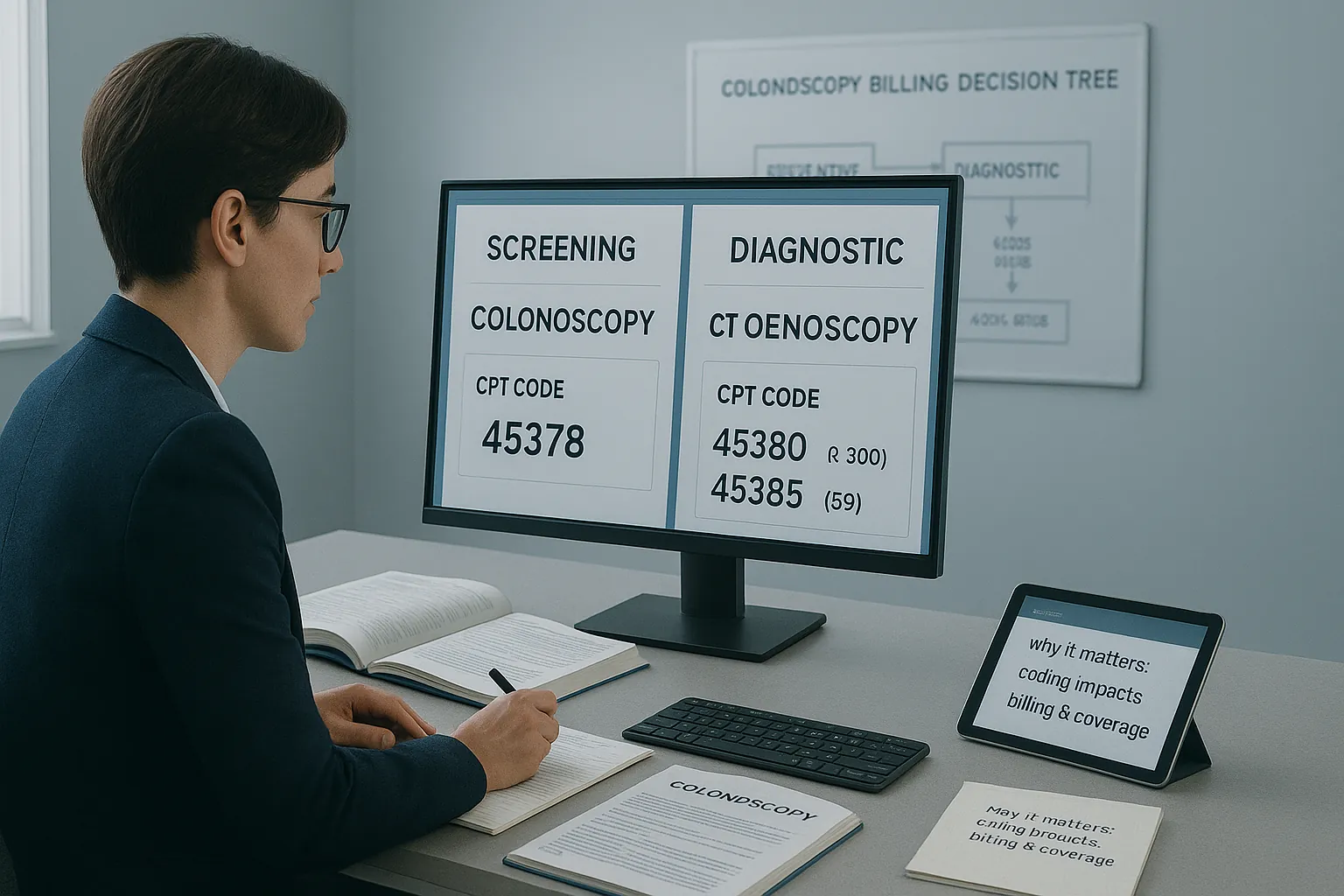
Understanding the difference between a screening and diagnostic colonoscopy is essential when selecting the correct CPT code for colonoscopy.
Screening Colonoscopy
Performed on an asymptomatic individual for preventive purposes. Usually advised for average-risk adults beginning at age 45.
Diagnostic Colonoscopy
Performed to investigate symptoms or follow up on abnormal test results.
The distinction impacts not just the CPT code used, but also patient cost-sharing, modifier usage, and payer-specific requirements.
HCPCS Codes for Screening Colonoscopy (Medicare)
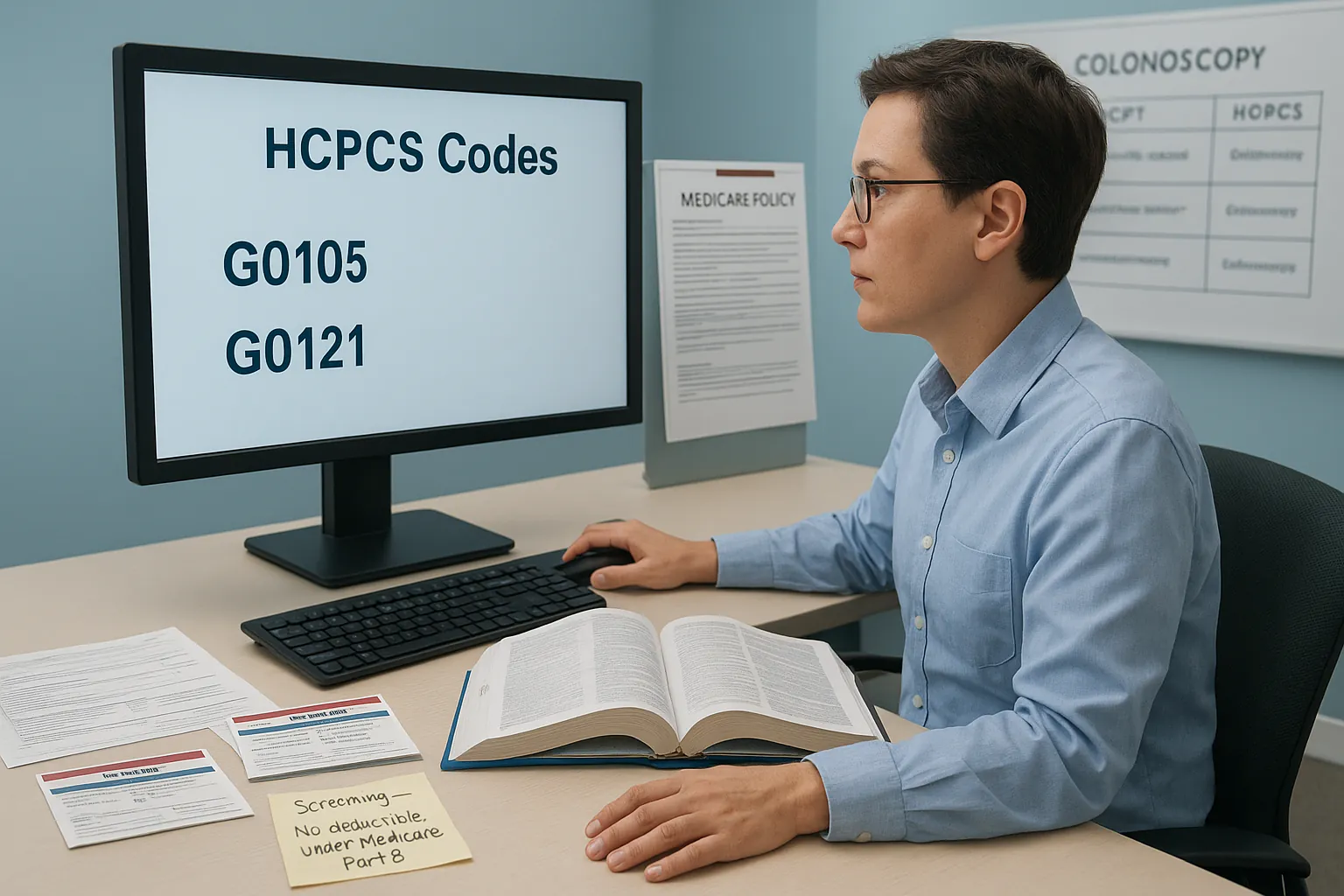
The appropriate code for a screening colonoscopy when billing Medicare is an HCPCS code rather than a CPT code:
G0121 – Screening colonoscopy for average-risk individuals
G0105: Colonoscopy screening for high-risk persons (e.g., colorectal cancer in the family)
Even though 45378 is the base CPT code for colonoscopy, do not use it for Medicare screening colonoscopies unless the procedure converts to diagnostic.
Modifier Usage: Screening Turned Diagnostic
Sometimes a colonoscopy begins as a screening, but becomes diagnostic when a polyp is found and removed. In these cases, modifiers are essential:
For Medicare: Use Modifier PT
Use with G0121 or G0105 when a screening colonoscopy turns therapeutic
Ensures the procedure is still recognized as screening, minimizing patient cost-sharing
For Commercial Payers: Use Modifier 33
Add CPT code 45378 when a screening turns into a diagnosis.
Indicates the preventive intent, helping preserve insurance coverage without co-pays
These modifiers are essential for accurate claims and to avoid unexpected bills for patients.
Expanded Colonoscopy CPT Code Set (45378–45398)
Colonoscopy CPT codes span a range of procedures beyond basic diagnostic exams. Here’s a quick overview of commonly used codes:
| CPT Code | Procedure Description |
|---|---|
| 45378 | Diagnostic colonoscopy |
| 45380 | Colonoscopy with biopsy |
| 45385 | Colonoscopy with polypectomy using snare |
| 45384 | Colonoscopy with removal using hot biopsy forceps |
| 45388 | Colonoscopy with ablation of tumors/polyps |
| 45391 | Colonoscopy with endoscopic ultrasound |
| 45398 | Colonoscopy with band ligation |
Understanding this range helps ensure you choose the most specific CPT code for colonoscopy performed.
Insurance Coverage: Medicare vs. Commercial Payers

Medicare
Covers screening colonoscopy at 100% under preventive services (if G0121 or G0105 is used)
If the procedure becomes therapeutic (e.g., polyp removal), patients currently owe 15% coinsurance
Coinsurance will phase out completely by 2030
Commercial Insurance (ACA-compliant plans)
Screening colonoscopies are fully covered under the Affordable Care Act
Modifier 33 helps preserve full coverage even when therapeutic interventions are performed
Always verify with the payer, as coding rules can differ by insurer.
Common Coding Mistakes to Avoid
Using 45378 for Medicare screening colonoscopies: Use G0121 or G0105 instead
Modifiers (PT or 33) are often forgotten, particularly when screening turns into a diagnosis.
Missing diagnosis code alignment: Use Z12.11 for screening encounters
Billing incorrectly can lead to denied claims or patient balances, even when coverage exists.
Documentation Tips
Good documentation is key to coding colonoscopy correctly. Be sure to include:
Indication: Screening vs. diagnostic
Risk factors or symptoms
Procedure details: Extent of scope, quality of bowel prep, any complications
Findings and interventions: Size and type of polyps, locations, tools used
This supports your chosen CPT code for colonoscopy and ensures compliance.
Coding Examples
Example 1: Screening Colonoscopy (Average Risk)
Code: G0121
Modifier: None
Diagnosis: Z12.11
Example 2: Screening Colonoscopy with Polyp Removal (Medicare)
Code: 45385
Modifier: PT
Diagnosis: Z12.11
Example 3: Diagnostic Colonoscopy with Biopsy
Code: 45380
Modifier: None
Diagnosis: R19.5 (Other fecal abnormalities)
These scenarios illustrate how the CPT code for colonoscopy changes based on context.
Conclusion
The correct use of CPT code for colonoscopy is essential not just for proper reimbursement, but also for ensuring patients receive the benefits they’re entitled to. Whether you’re coding for a screening exam or a therapeutic procedure, understanding the rules for CPT, HCPCS, and modifiers will protect your practice from denials and billing errors.
Keep in mind that coding guidelines evolve. Always verify payer-specific requirements, and stay current with AMA and CMS updates.
Frequently Asked Questions (FAQs)
1. What is the primary colonoscopy CPT code?
For colonoscopies, the most often used CPT code is 45378; this code represents a diagnostic procedure that does not involve any interventions.
2. What code should I use for a screening colonoscopy with Medicare?
Use G0121 for average-risk individuals and G0105 for high-risk. If a polyp is removed, append modifier PT.
3. When should I use modifier 33?
Use modifier 33 with commercial insurance claims when a screening colonoscopy turns into a diagnostic or therapeutic procedure.
4. Does the CPT code for colonoscopy change with a polyp removal?
Yes. For example, 45385 is used for polyp removal using a snare technique. Always choose the most accurate code for the procedure performed.
5. Is colonoscopy fully covered by insurance?
For most ACA-compliant and Medicare plans, screening colonoscopy is covered 100%. However, diagnostic or converted screenings may involve cost-sharing unless proper modifiers are used.
Topics

Published by MedBiller Texas
Medical billing and revenue cycle management for healthcare practices, from our office in Grapevine, Texas.