


In medical billing and coding, accuracy is crucial. Every code, modifier, and figure has significant weight and directly affects the compensation received by healthcare workers. Of these, modifier 26 is one of the most often used—yet sometimes misunderstood—billing modifications. Coders, doctors, and billing departments must all know how to utilize it properly since it can affect whether a claim is rejected because of a technical error or paid quickly.
1. What Is Modifier 26?
The Professional Component modifier is the official name for Modifier 26. It indicates that the service being invoiced only relates to the interpretation, analysis, and reporting of a diagnostic test or procedure, which is the professional job of a doctor or other certified healthcare provider.
In contrast, many diagnostic services involve two distinct components:
- The technical component, which refers to the use of equipment, supplies, and technical staff
- The professional component, which involves the physician’s skill in interpreting the data and producing a report
When a provider is only responsible for the professional aspect of a service — for instance, interpreting an X-ray taken at an external facility — 26 modifier is appended to the Current Procedural Terminology (CPT®) code to denote that distinction.
2. Why Modifier 26 Exists
The concept of modifier 26 arose from the need to separate the professional expertise from the technological infrastructure in medical services. The equipment is frequently owned by hospitals and other independent diagnostic centers, who also hire technicians to conduct imaging examinations and provide interpretative services.
Payers wouldn’t have a way to differentiate between these obligations without modifier 26, which could result in incorrect payments or duplicate billing. As a result, the modifier guarantees that payment corresponds with the amount of service that the billing entity actually provided.
3. Correct Usage of Modifier 26

Applying modifier 26 correctly requires both clinical and administrative understanding. It should be used when:
- The physician interprets a diagnostic test performed at a facility not owned by the physician’s practice
- The provider performs only the interpretive portion of a service
- The aforementioned CPT® code permits the division of technical and professional elements
For example, if a cardiologist were to interpret an echocardiography that was done in a hospital imaging suite, they would bill the relevant CPT code with 26 modifier applied. To show the service is standard, the hospital bills the same CPT® code with modifier TC (Technical Component).
4. When Modifier 26 Should Not Be Used
Modifier 26 is often misused despite its importance. It should not be appended when:
- The physician or clinic owns the equipment and employs the technical staff who perform the service
- The service is entirely professional by definition (e.g., most evaluation and management codes)
- The CPT® code in question inherently represents only the professional work
In such cases, using the 26 modifier may cause claim denials or trigger compliance audits.
5. Examples of Correct Application
Using real-world examples helps show when to use modifier 26:
- Radiology: A CT scan is done at a hospital. The radiologist bills the interpretation with modifier 26, while the hospital bills CPT® 71260 with modifier TC
- Cardiology: An ECG performed at a diagnostic facility is interpreted by a cardiologist. Modifier 26 is added by the doctor to the ECG interpretation code
- Pathology: A pathologist examines biopsy slides made in a medical facility’s lab. Modifier 26 is used in the billing for the interpretation in order to identify the professional component
These illustrations show how the modifier guarantees fair and open charging procedures among various institutions.
6. Documentation Requirements
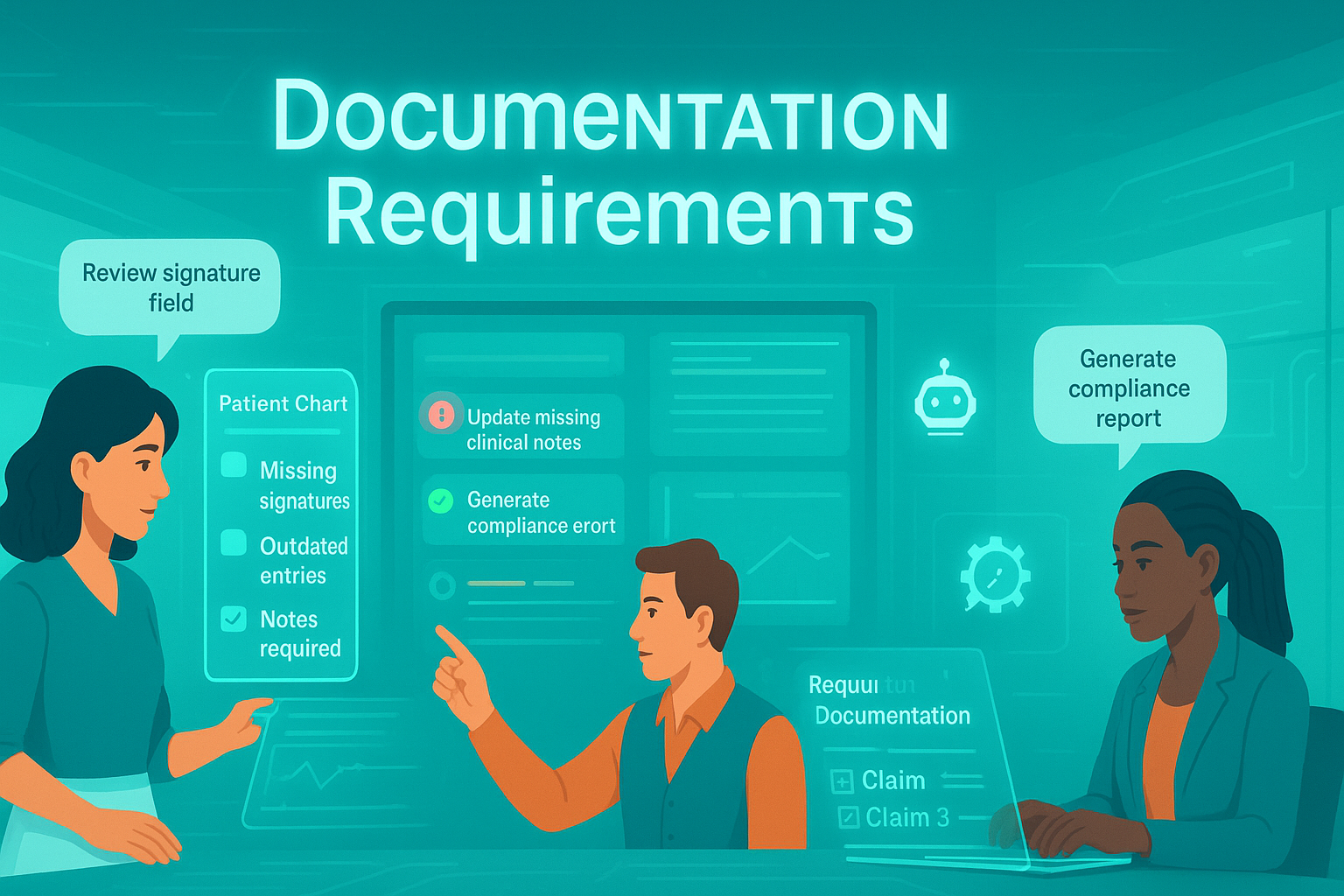
Accurate documentation is fundamental to supporting claims that include 26 modifier. The physician’s report must clearly demonstrate professional involvement — typically through a signed and dated interpretation report.
Auditors often look for:
- The name and credentials of the interpreting provider
- The date and time of interpretation
- A detailed analysis of findings and diagnostic impressions
- A final report integrated into the patient’s record
Even a correctly coded claim employing modifier 26 may be denied during payer review if there is insufficient documentation.
7. Typical Mistakes and How to Prevent Them
Modifier 26 abuse can have serious financial consequences. Common mistakes include:
- Using the modifier on global codes — Some CPT® codes represent both professional and technical components in a single global fee. Appending modifier 26 to these codes is unnecessary and may cause confusion
- Omitting the modifier when required — Failure to append 26 modifier when billing only for interpretation can lead to underpayment
- Assuming that all imaging codes must have the modifier; office-based imaging, for instance, does not need it because both processes are carried out internally
Reducing these errors and preserving compliance can be achieved by staff training and frequent internal audits.
8. Compliance and Payer Variations
Different payers may have specific requirements regarding modifier 26. Medicare, for example, recognises its use extensively but mandates that documentation align with the Medicare Claims Processing Manual. Different commercial insurers may allow bundled billing, while others may require that technical and professional components be filed as separate claims.
Before using modifier 26, check payer-specific rules. Ignoring them can lead to audits, denials, or delayed payments.
9. Modifier 26’s Function in Contemporary Telehealth

As telemedicine expands, the use of modifier 26 has taken on new dimensions. Physicians may remotely interpret imaging or diagnostic data captured at external facilities. 26 Modifier nevertheless shows that the professional component—and only that component—was carried out under these circumstances.
This program makes it possible for digital and physical healthcare services to be seamlessly integrated, guaranteeing that reimbursement models adapt to changing approaches to care delivery.
10. The Best Methods for Billers and Coders
Coders and billers should follow these recommended practices to make the most of modifier 26:
- Check to see if the CPT® code permits component separation
- Ascertain who is the owner of the diagnostic service equipment
- Examine the requirements for submissions and documents particular to each payer
- Keep detailed records of all reports and interpretations
- To find possible abuse or overuse, do compliance checks
Healthcare organizations can guarantee accuracy and integrity in their billing procedures by following these guidelines.
11. The Broader Impact of Modifier 26
26 Modifier has wider consequences for healthcare economics than just the obvious financial ones. It enables the system to equitably allocate charges to the individuals in charge of various care-related tasks. This ensures transparency and accountability, key for a strong healthcare system.
26 Modifier also emphasizes the importance of professional expertise. Even while diagnostic equipment can record data or photos, interpretation is still a very human ability. Recognising this through precise coding ensures that clinicians receive appropriate compensation for their intellectual labour.
Conclusion
Modifier 26 is essentially an essential link between expert interpretation and technology. It is more than just an administrative marker; it is a tool that upholds equity and transparency in medical billing. To prevent compliance issues, promote appropriate reimbursement, and bolster the credibility of medical records, Modifier 26 should be fully comprehended and used.
Medical coders who comprehend modifier 26 demonstrate their commitment to healthcare financial excellence, professional competence, and ethical diligence in addition to their technical proficiency.