

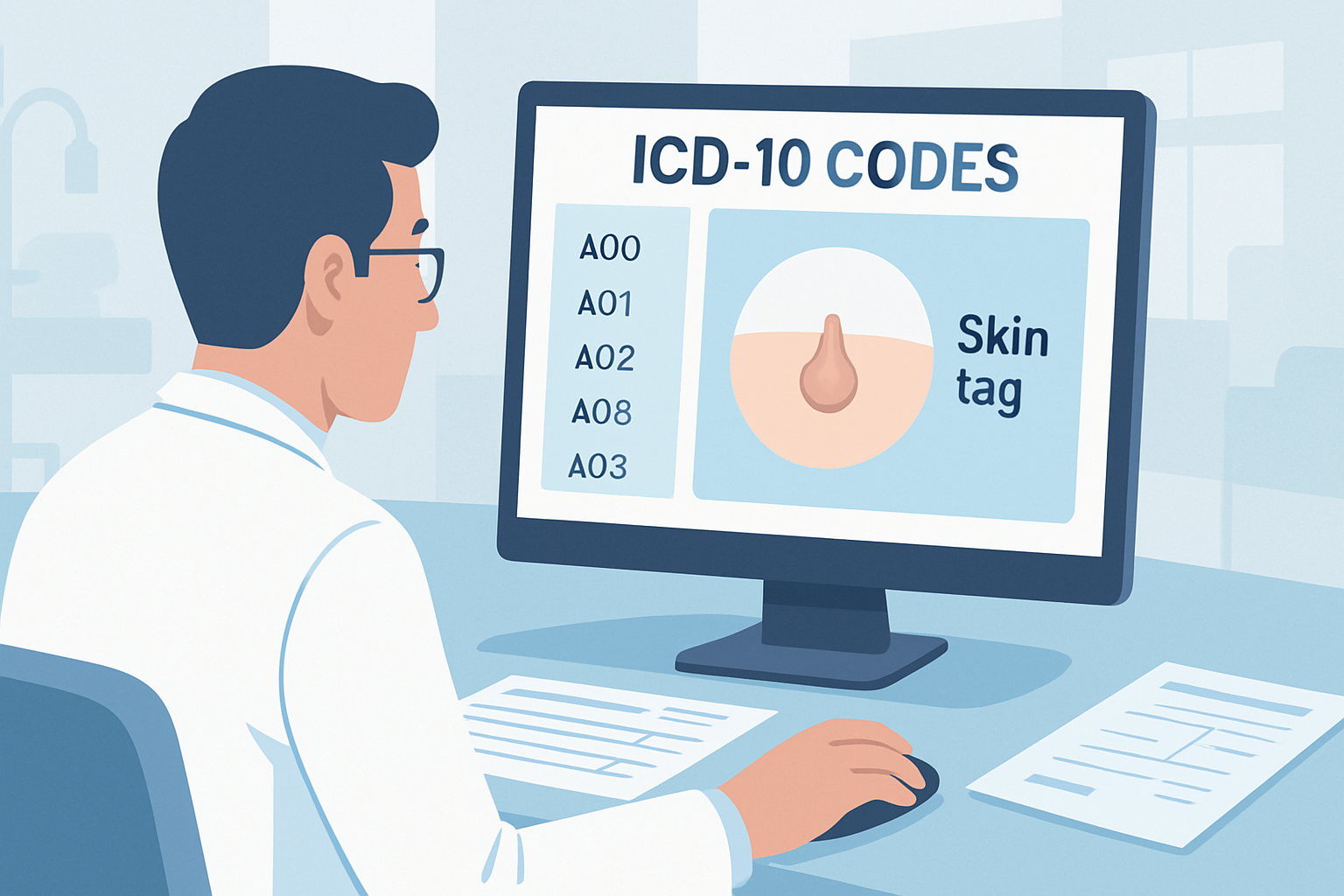
Exact billing and proper coding are necessary for accurate invoicing and successful reimbursement in dermatology and general practice. Skin mark — clinically known as the Acrochorden — is a common skin condition in patients of all ages. While often benign and touching, they can be irritated, swollen, or cosmetically unwanted, which can lead to the removal of patients. Using the right skin tag ICD 10 code is important for both medical documentation and processing of insurance requirements. This article detects the ICD-10 code suitable for skin brands, explains invoicing nuances, and highlights the documentation tips for optimal approval of requirements.
Common ICD-10 Codes for Skin Tags
Several skin tag ICD 10 codes can be used when documenting and billing for the removal of skin tags. The choice depends on the nature, location, and presentation of the lesion.
L91.8 – Other Hypertrophic Disorders of Skin
This is one of the most frequently used skin tag ICD 10 codes. It is suitable when the skin tag is described as hypertrophic and does not fall under any more specific diagnostic category. It can be applied when the skin tag is inflamed, irritated, or located in skin folds where friction is common.
D23.9 – Skin Benign Neoplasm, Unspecified
D23.9 is appropriate when the skin tag is classified as a benign neoplasm and its specific anatomical location is not detailed. This code is useful when skin tags appear as isolated lesions and are not associated with irritation or inflammation.
L98.8 – Other Special Pores and Skin Disorders and Subcutaneous Tissue
L98.8 is usually used when skin marks are present with symptoms located in sensitive areas such as bleeding, inflammation, or when genitals or perianal areas. This code can support claims where the removal is medically necessary due to discomfort or risk of further complications.
K64.4 – Residual Hemorrhoidal Skin Tags
This site-specific code applies to residual tags found after the resolution of hemorrhoids. It is used for perianal skin tags and may be linked with prior proctologic conditions.
ICD-10 Codes to Avoid for Skin Tags
It’s important to avoid incorrect codes that may lead to claim denials. The following are commonly misused but are not appropriate for billing skin tag ICD 10 removals:
- L72.3 – Miliaria rubra (heat rash)
- L91.0 – Hypertrophic scar
- L72.0 – Epidermal cyst
These codes describe distinct dermatological conditions unrelated to skin tags and should not be used to justify removal procedures.
CPT Codes for Skin Tag Removal
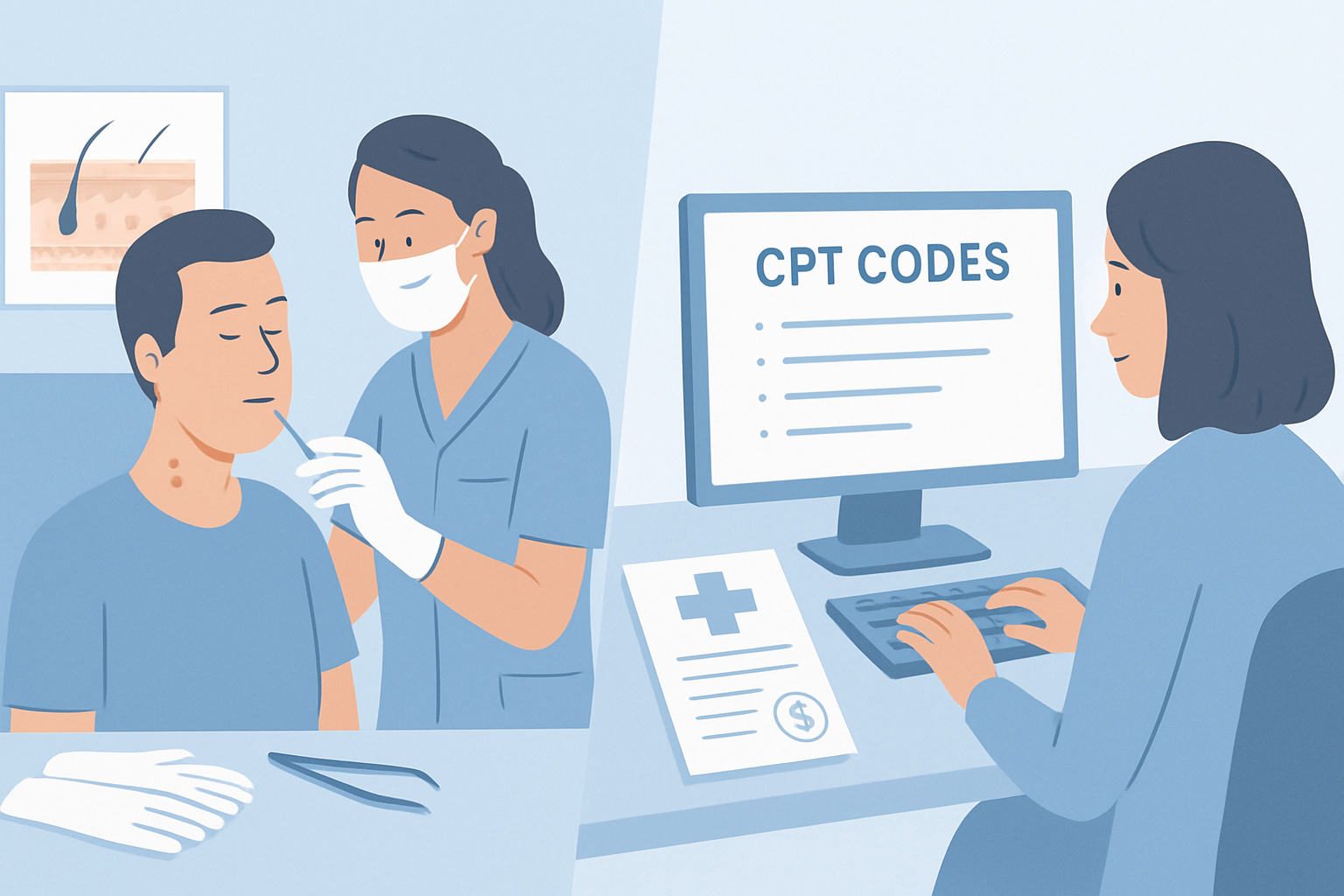
When skin tag ICD 10 removal is medically necessary, the appropriate CPT codes must accompany the ICD-10 diagnosis codes to ensure proper billing:
- 11200 – Removal of skin tags, multiple fibrocutaneous tags, any area; up to and including 15 lesions.
- 11201 – Each additional 10 lesions (List separately in addition to code for primary procedure).
These codes must be paired with a billable skin tag ICD 10 code that justifies the removal as medically necessary, not purely cosmetic.
Documentation Tips for Billing Compliance
Accurate documentation plays a pivotal role in supporting medical necessity for skin tag ICD 10 removal. Consider including the following in clinical notes:
- Location of the skin tags
- Number of lesions removed
- Any symptoms such as irritation, bleeding, or swelling
- Evidence of obstruction or interference with regular physical functions
- Description of treatment method (e.g., cryotherapy, sorting, cauterization)
Insurance companies often examine claims associated with the removal of skin brands, especially when processes are considered cosmetic. Extensive documentation can reduce the risk of refusing and improve reimbursement results.
Medical Claim vs Cosmetic Procedures
Most insurance companies do not refund to remove asymptomatic skin brands. For reimbursement, documentation must demonstrate medical requirements — such as irritation, recurrent trauma, or infection. Photographs and frequent clinical stories can also support the claim when coded under skin tag ICD 10.
Frequently Asked Requested Questions
1. What is the most used skin tag ICD 10 code?
The most commonly used code is L91.8 – Other hypertrophic disorders of skin, especially when the tag is symptomatic or lacks a more specific classification.
2. Can I use D23.9 for all skin tag removals?
D23.9 is suitable when the skin tag is considered a benign neoplasm and the site is not specified. However, L91.8 or site-specific codes may be more appropriate in some cases.
3. Is skin tag removal usually covered by insurance?
Only when medically necessary. Cosmetic removals are typically not covered unless documentation proves symptoms like irritation, bleeding, or infection.
4. What should be used to use CPT code to remove skin code?
Use 11200 for removal of up to 15 skin tags. 11201 is used for each additional 10 skin tags beyond that.
5. Can I bill L72.3 or L72.0 to remove skin marking?
No. These codes refer to other conditions (Milliyariya Rubra and epidermal ulcers) and are not suitable for skin marks.
6. What documentation supports medical necessity for skin tag removal?
Symptoms such as pain, irritation, bleeding, or functional intervention should be clearly noted in the clinical items. Include lesion count, location, and method of removal.
7. Can I bill a couple of skin tags below one diagnosis code?
Yes, but make sure your documentation reflects the far number and justifies the used CPT code (e.g., 11200/11201).
8. Are there particular ICD-10 codes for pores and skin tags within the genital area?
Yes. L98.8 may be appropriate for symptomatic skin tags in sensitive areas such as genital or labial regions.
9. What is K64.4 used for?
K64.4 is used for residual hemorrhoidal skin tags, often located in the perianal region post-hemorrhoid treatment.
10. How do I prevent claim denials for skin tag elimination?
Use the exact skin tag ICD 10 and CPT code, avoid cosmetic justification, and maintain completely, symptomatic documentation.
Final Thoughts
Understanding and implementing the correct skin tag ICD 10 code can greatly affect the requirements of the requirement and reimbursement. Providers should be careful to match the clinical image with appropriate ICD-10 and CPT codes and ensure that the documentation clearly supports the medical requirement. By following these coding and documentation standards, practice can avoid normal invoicing losses and ensure appropriate compensation for provided services.